 es
es de
de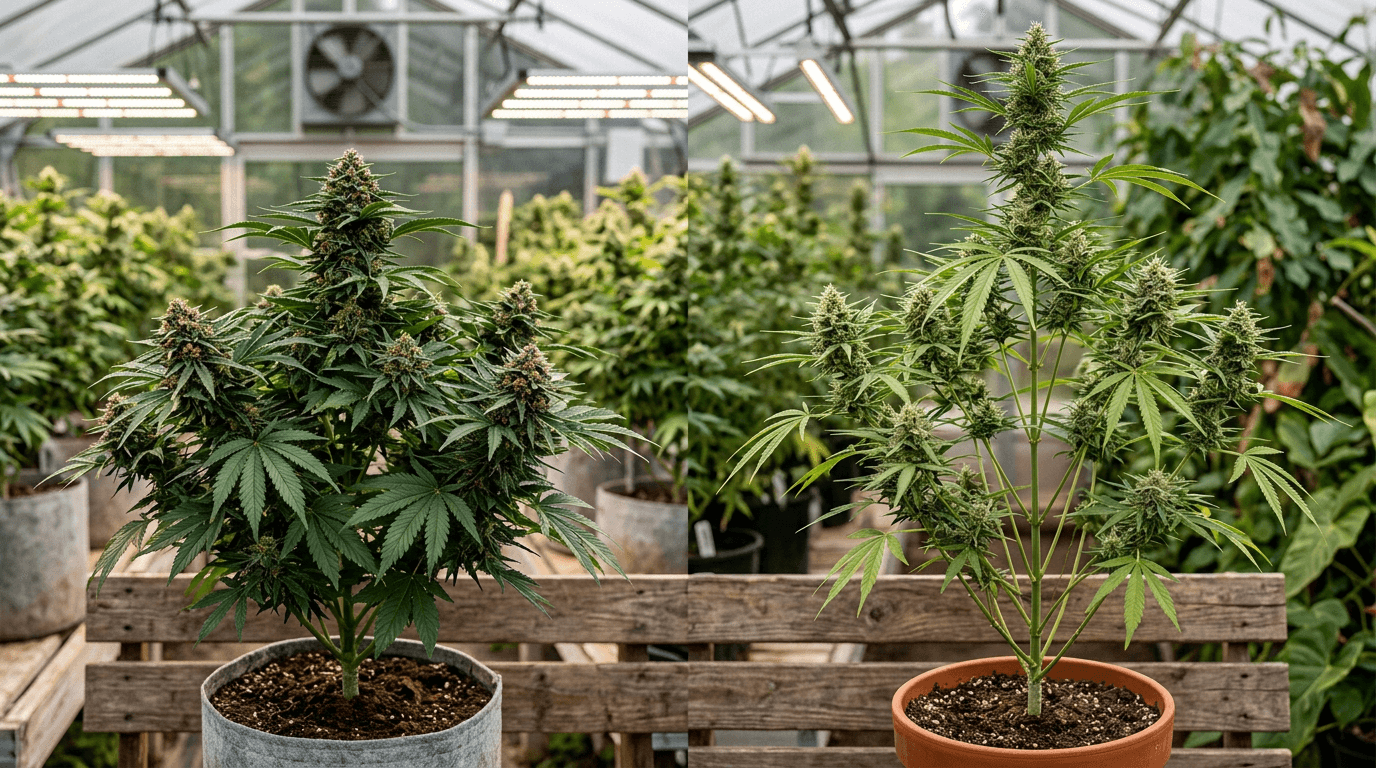
The differences between indica and sativa are clear in the plant —shape, size and growing— but far blurrier in their effects. Indica is short, compact and short-flowering; sativa is tall, slender and long-flowering. The popular “indica relaxes and sativa energises”, however, is a simplification that current science debunks: the effect is set by terpenes and cannabinoids, not the label. Let’s separate the real from the mythical.
The real differences: morphology and growing
Here the distinction is solid and useful, especially if you’re going to grow. Indica and sativa come from different environments and have developed very different structures:
| Characteristic | Índica | Sativa |
|---|---|---|
| Origin | Mountainous regions (Hindu Kush, Afghanistan) | Equatorial regions (Thailand, Mexico, Africa) |
| Height | Short and compact (0.6-1.8 m) | Tall and slender (up to 3-4 m) |
| Leaves | Broad, dark green | Narrow, light green |
| Flowering | Short (7-9 weeks) | Long (10-14 weeks) |
| Ideal climate | Cold or temperate, short seasons | Warm, long and sunny |
| Structure | Dense, close branches | Spaced branches, more open |
These differences are predictable and reliable: an indica will always tend to be shorter and faster, and a sativa taller and later. It’s in the realm of effects where the problems begin.
🌱 Indica, sativa or hybrid?
Explore varieties of each type and pick the one that fits your grow.
See available varieties →The myth of “indica relaxes you, sativa energises you”
It’s the most repeated belief about cannabis, and also the most questioned. The idea that indica produces a physical, sedating effect (“couch-lock”) and sativa a cerebral, energising one doesn’t hold up when you analyse each plant’s chemistry.
The reason is simple: the terms “indica” and “sativa” describe the plant’s botany, not its chemical makeup. Two varieties labelled indica can have completely different profiles and cause opposite sensations. Industry researchers have spent years pointing out that this classification predicts effects very poorly and has become little more than a commercial label.
What really sets the effect: cannabinoids and terpenes
If the effect doesn’t depend on the category, what does it depend on? On two factors you can actually check on a variety’s spec sheet or lab report:
- The cannabinoid ratio (THC:CBD): it determines the intensity and balance. High THC with little CBD is more psychoactive; a ratio with more CBD is usually milder and more functional.
- The terpene profile: the aromatic compounds that shape the experience. Some examples:
- Myrcene: a relaxing, sedating tendency (the famous “couch-lock”).
- Limonene: citrusy, linked to an uplifting effect.
- Pinene: brings a sense of clarity and focus.
- Caryophyllene: spicy, with a relaxing edge.
That’s why an “indica” loaded with limonene can feel stimulating, and a “sativa” rich in myrcene can make you drowsy. The chemical profile rules over the label.
What about hybrids? Almost everything you grow is one
There’s a nuance that rounds all this off: pure varieties (landraces) are a rarity today. Decades of crossbreeding have made practically the entire commercial catalogue hybrid, a mix of indica and sativa genetics.
That’s why you’ll see labels like “indica dominant” or “sativa dominant”: they indicate which morphological traits prevail, not a guarantee of effect. Hybrids let you combine the best of both worlds, like the fast flowering of an indica with the productive size of a sativa.
So how do I choose?
It depends on whether you’re deciding as a grower or looking for a specific effect:
| Your priority | What to look at |
|---|---|
| Limited space or height | Indica (compact size) |
| Fast harvest or several a year | Indica (short flowering) |
| Warm outdoors with vertical space | Sativa (bigger size and harvest) |
| A specific effect | The terpene profile and THC:CBD ratio, not the label |
In short: for growing, the indica/sativa distinction is a practical, reliable guide. To choose by effect, forget the category and look at the variety’s chemistry.
Frequently asked questions
What’s the main difference between indica and sativa?
The most reliable difference is morphological and about growing, not effects. Indica is short, compact, broad-leaved and short-flowering (7-9 weeks); sativa grows tall and slender, with thin leaves and long flowering (10-14 weeks). The popular “relaxes vs energises” contrast is far less reliable than people think.
Is it true that indica relaxes and sativa energises?
It’s an unreliable simplification. The effect isn’t determined by the indica or sativa label, but by each variety’s cannabinoid and terpene profile. Two “indica” plants can produce opposite sensations depending on their terpenes. Current science considers this classification a poor predictor of effects; it works better to describe the plant.
Which is better, indica or sativa?
Neither is better in itself: it depends on your goal. For growing in little space, a cold climate or seeking a fast harvest, indica is more practical. For warm outdoors with vertical space and big harvests, sativa yields more. And for a specific effect, go by the terpenes, not the category.
What’s the difference in growing between indica and sativa?
Quite a lot. Indica is short and compact, with short flowering (7-9 weeks), ideal for indoors and cold or short-season climates. Sativa grows tall and stretched, with long flowering (10-14 weeks) and needs more space, heat and light. For the grower, the distinction is useful and reliable, unlike with effects.
What is a hybrid variety?
A hybrid is the cross between indica and sativa genetics, which today makes up the vast majority of the market; pure varieties (landraces) are rare. They’re labelled “indica dominant” or “sativa dominant” depending on which traits prevail in the plant. Hybrids let you combine, for example, the fast harvest of an indica with the effect of a sativa.
How do I know what effect a variety will have?
Look at the variety’s lab report, not the indica/sativa label. The THC:CBD ratio sets the intensity and balance, and the terpenes guide the nuance: myrcene tends to relax, limonene to uplift and pinene to give clarity. That profile predicts the effect far better than the category.